Home > Blog > Leave No Trace During Winter Recreation
Leave No Trace During Winter Recreation
1. Plan Ahead and Prepare
Know the area and what to expect; always check avalanche and weather reports prior to departure. Consult maps and local authorities about high danger areas, safety information, and regulations for the area you plan to visit.
Prepare for extreme weather, hazards, and emergencies.
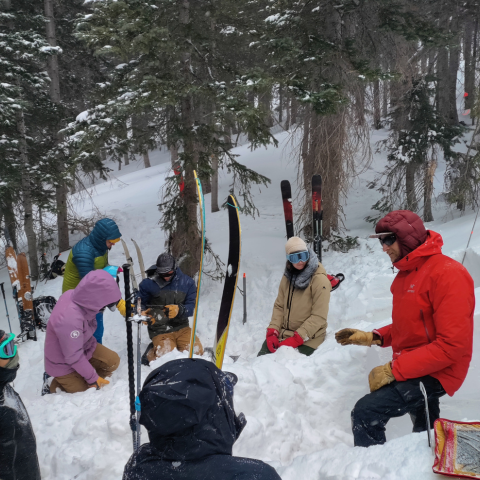
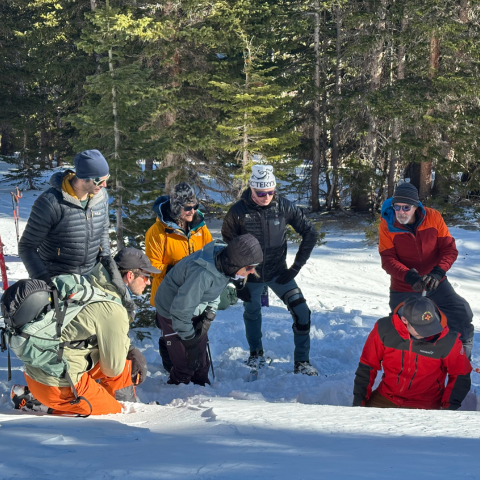
Monitor snow conditions frequently. Carry and use an avalanche beacon, probe, and shovel. Educate yourself by taking a winter backcountry course such as an AIARE Rec 1 course.
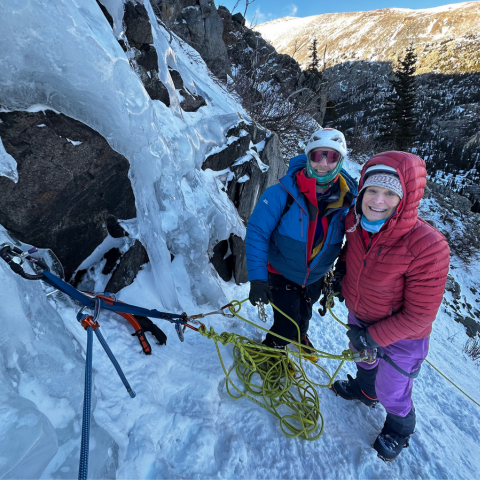
Carry proper equipment and know how to use it, including safety gear for ice climbing and winter conditions.
Visit the backcountry in smaller groups. Leave your itinerary with family or friends.
Repackage foods into reusable containers.
Use a map and compass to eliminate the need for tree markings, rock cairns or flagging. Only use the methods when necessary.
2. Travel and Camp on Safe, Durable Surfaces
On the trail:
Stay on deep snow cover whenever possible; in muddy spring conditions, stay on snow or walk in the middle of the trail to avoid creating new trails and damaging trailside plants
Travel and camp away from avalanche paths, cornices, steep slopes, and unstable snow.
At Camp:
Choose a site on durable surfaces-snow, rock, or mineral soil-not tundra or other fragile vegetation.
Camp at a safe, stable site out of view of heavily traveled routes and trails.
Keep pollutants out of the water source by camping at least 200 feet( 70 adult steps) from recognizable lakes and streams-consult your map.
3. Dispose of Waste Properly
Pack it in, Pack it out. Pack out everything you bring with you. Burying trash and litter in the snow or ground is unacceptable.
Pick up all food scraps, wax shavings, and pisces of litter. Pack out all trash; yours and others.
Pack out solid human waste by utilizing WAG bags.
If necessary, use small amounts of biodegradable soaps for dishes. Strain dishwater into a sump hole.
Inspect your campsite for trash and evidence of your stay. Dismantle all snow shelters, igloos or wind breaks. Naturalize the area before you leave.
4. Leave What You Find
Leave all plants, rocks, animals, and historical or cultural artifacts as you find them.
Let nature’s sounds prevail. Keep loud voices and noises to a minimum.
5. Minimize Campfire Impacts
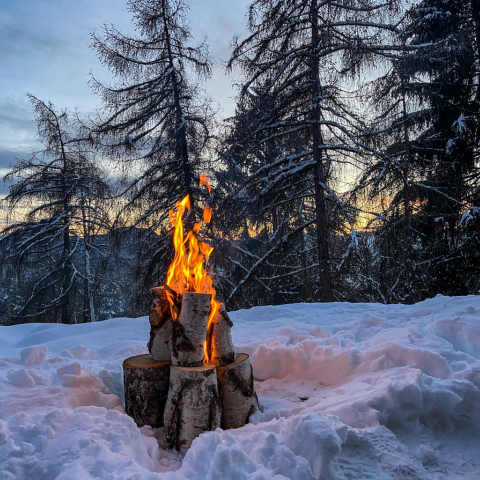
Campfires cause lasting impacts in the backcountry. Always carry a lightweight camp stove for cooking.
Use dead downed wood if you can find it. Put out all fires completely. Widely scatter cool ashes.
Do not cut or break limbs off live, dead or downed trees.
For Locations such as Rocky Mountain National Park, NO CAMPFIRES ARE ALLOWED. Always check your land managers website for campfire rules and restrictions.
6. Respect Wildlife
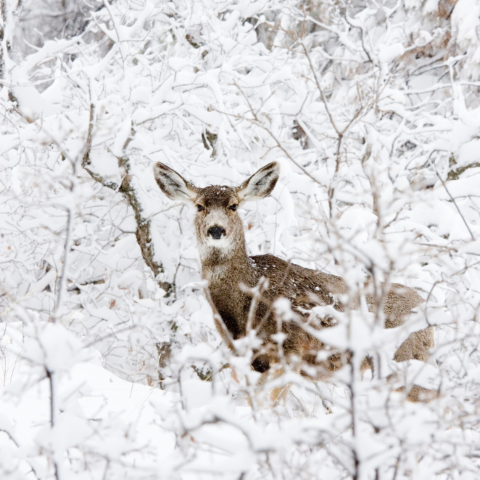
Winter is an especially vulnerable time for animals. Observe wildlife from a distance. Do not follow or approach them.
Never feed wildlife or leave food behind to be eaten.
Protect wildlife and your food by storing rations and trash securely.
7. Be Considerate of Other Visitors
Be respectful of other users. Share the trail, ice and be courteous.
Keep noise levels low and respect other users experiences.
Yield to downhill and faster traffic. Prepare for blind corners.
When stopped, move off the trail.
Separate ski and snowshoe tracks where possible. Avoid hiking on ski or snowshoe tracks.
Learn to follow and follow local regulations regarding pets. Control dogs and pack out all dog feces.






 (720) 598-2864